The first few trips we took after my coeliac diagnosis were a learning curve! During our week long trip to Lisbon, Portugal, we ate at the same small chain of restaurants for almost every meal because we knew they could prepare the food safely. To be fair to them, the food at Honest Greens is genuinely very good, but by doing this we missed out on the experience of trying local authentic cuisine which is a huge part of experiencing new cultures which is what travelling is all about!
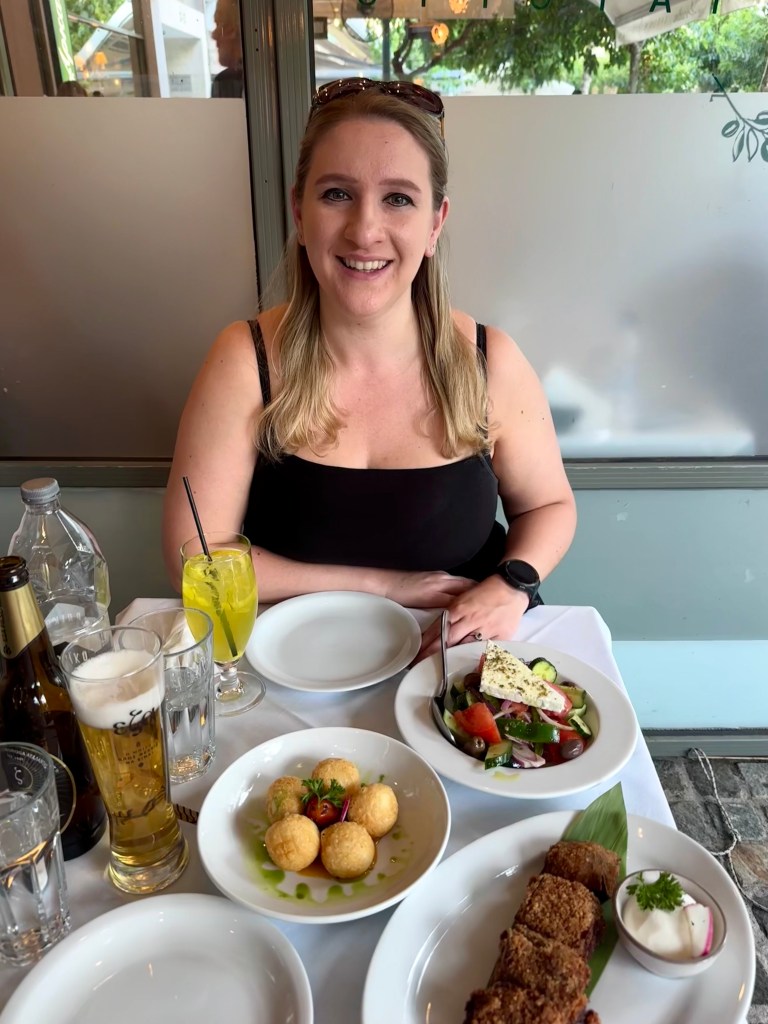
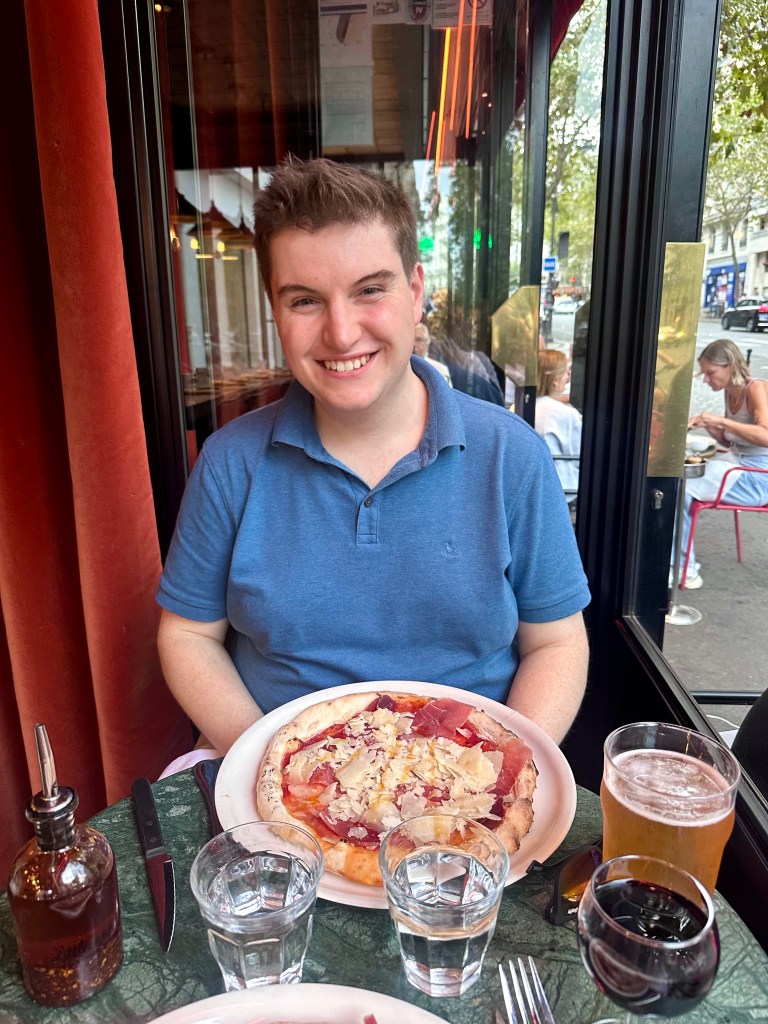
We’ve since visited a number of destinations across 10 countries and we’ve been able to have so many incredible experiences that I didn’t think we’d be able to have; making paella at a Spanish cooking class in Seville, eating traditional Bedouin cuisine at a camp in the Dubai desert and eating fresh pastries with a view of the Eiffel Tower in Paris.
We’ve learnt a lot along the way! Here are our tips for travelling safely gluten free.

Research your destination in advance
Once we’ve chosen our destination, there are a number of apps and online resources that we use to help us find good places to eat:
- Find Me Gluten Free
- Atly
- TripAdvisor + Google Maps
- Blogs + social media
- Local coeliac societies / charities
Find Me Gluten Free was a genuine game changer for us! The app works in a similar way to the restaurant search on Tripadvisor, but the main difference is that every person reviewing the restaurants can’t eat gluten (coeliac, gluten sensitivity, IBS, etc). As well as reviewing the taste of the food, users also include details about the safety of the food preparation as well as the variety of gluten free options available. This app is the first place we look when we’re planning a trip and we’ve discovered so many amazing places to eat from using it! The free version of the app is enough to get by, but for extra features like searching places by “most celiac friendly”, you’ll want the paid subscription.
We’re really excited to be affiliates with Find Me Gluten Free and you can get $5 off a premium subscription with code JESS.
Atly is an app similar to Google Maps which offers Gluten Free filter with results receiving ratings based on their awareness of coeliac; “gluten free options” “celiac accommodating” “celiac friendly” and “100% gluten free”. The downside of Atly is that you need a subscription to unlock these features and it comes at a high cost of £99.99 per year (compared to £18.49 per year for Find Me Gluten Free Premium). We did the one week free trial and it does have a lot of places listed so is definitely a good option.
Tripadvisor and Google Maps can be helpful tools if you use them right. The restaurant search feature on Tripadvisor has a filter for “Gluten Free Options” which is helpful, though not always widely used. Both apps also feature a text search on their reviews; we often search for the words “coeliac”, “celiac”, “gluten” and “allergy” to get a feel for how a place deals with dietary restrictions.
There are a number of blogs online of people sharing gluten free recommendations. We usually search on google our destination name + “gluten free”. (even better if you translate “gluten free” into the local language, e.g. “Paris Sans Gluten”.
There are lots of online blogs and people on social media sharing their gluten free recommendations from around the world. Our favourites are:
- @celiacsarahexplores
- @endlessdistances
- @gluten_free_traveller44
- @celiacinitaly
- @glutenfreestreetgang
- @howtocoeliac
- @eat.glutenfreewithme
- @myglutenfreeguide
It’s also helpful to look up whether your destination has an organisation dedicated to coeliac disease; we discovered “Red Sevilla Sin Gluten” when visiting Seville which was such a useful resource! The travel destination guides published on Coeliac UK are often a good place to start.
As part of your research, look up common hidden sources of gluten in that country; e.g. soy sauce and knorr in Southeast Asia. This can help you communicate better in restaurants as awareness of gluten can vary country to country.
Research your accommodation in advance
In destinations where you’re less confident in the local gluten free cafes and restaurants, research hotels that can cater.
The review text search features on TripAdvisor and Google Maps are good for this. If you know you can eat a good breakfast and dinner at your hotel, a lot of the stress is taken away during the day!
Consider all inclusive resorts and cruises; just make sure to research in advance.
For one of our first trips after my coeliac diagnosis, we visited Sandals Grande Antigua and had the best time! The food was incredible and everyone who worked there had such incredible allergy awareness. This was such a positive experience at a time where I was feeling so nervous about living gluten free! Sandals was recommended to us by one of the reps at Virgin Holidays as she had personal experience of travelling to a Sandals resort with a family member who is coeliac.
We also had an incredible experience on our recent Virgin Voyages cruise around the Greek islands! All of the food on the ship is cooked to order and whilst it can look like the GF options are limited, they could adapt most of the menus to be available gluten free. Everyone who worked there was so helpful and accommodating which was incredible! We had looked up a number of reviews before our trip so we were fairly confident they would be able to cater.
If you’re visiting somewhere where you’ll struggle to find safe gluten free options, or you just want the peace of mind of cooking for yourself, self catered accommodation provides an extra level of safety, since you’ll be preparing your own meals.
We booked an Airbnb for our trip to Strasbourg at Christmas, since rural France can be challenging for dietary restrictions and we also had to navigate Christmas opening hours, and it worked out perfectly for us! We still enjoyed some coeliac safe treats in the Christmas market, but knowing I always had a safe meal to come back home to gave me real peace of mind. We were worried that having to cook would make us feel less immersed in the Alsace culture, but the Christmas Day fondue in our Airbnb proved us wrong!
Communicate your needs
Language cards are small cards (physical or virtual) which translate the requirements of coeliac disease into different languages. They are a great tool for communicating about coeliac disease when there is a significant language barrier!
There are a number out there in the market but they all generally will describe that you can’t have wheat, barley, rye or non-GF oats and will explain the principle of cross contamination / cross contact. We’ve bought a number of language translation cards over the years and have found them really helpful!
Legal Nomads offer translation cards that have been carefully crafted by someone with celiac disease and have been taken through through 2 sets of translations to ensure accuracy. Each card lists out local ingredients and dishes that have gluten in them.
We’re excited to be affiliates of Legal Nomads and you can support us by using these links: Legal Nomads Translation Card Links
Equal Eats is also a popular choice; they have a really extensive offering of travel language cards, including customisable ones which are great if you have multiple dietary restrictions!
We’re excited to be affiliates of Equal Eats and you can get 10% off an order with code JESSANDMARTIN.
In countries where awareness of coeliac disease is lower, use the phrase “gluten allergy” to describe your requirements instead. Most restaurants have at least some level of allergy training which is helpful when talking about things like cross contamination. This was particularly helpful on our trip to Dubai where there was very low awareness of coeliac but very good contrails around allergies.
Plan for travel days
Contact your airline in advance to request a gluten free meal with plenty of advance notice, especially if it’s a long flight.
It’s also a good idea to research where you can eat at the airport. Sometimes airlines can forget to bring allergy meals onto the flight, which is a lot easier to deal with if you’ve already had a good meal that day. The premium version of Find Me Gluten Free app has a feature dedicated to finding places to eat in airports.
For overnight train journeys, visit a GF bakery or supermarket before and buy a picnic to have in your cabin, so you’re not reliant on the options on board. Some train operators also give you the option to pre book a gluten free breakfast.
Pack the essentials
It’s always a good idea to bring GF snacks with you when travelling, especially on longer travel days or day tours.
I’d also suggest bring a mix of sweet and savoury to avoid a sugar rush! My favourites are snack bars, crackers and flatbreads from companies like Nairns, Schar, Creative Nature and Freee. Remember that a lot of destinations (especially across Europe) will have supermarkets with good gluten free sections so you can buy more snacks when you get to your destination – you don’t need to bring a full suitcase of snacks!
If you have any medication that helps you with symptoms on if you’re unlucky and get glutened (for me it’s paracetamol and buscomint), it’s always a good idea to keep some with you. I’ve been fortunate enough not to have any issues whilst travelling so far, but it’s a relief to know I have what I need, just in case!
Once you arrive at your destination – relax! Enjoy your trip knowing you’ve done all the hard work in advance and are prepared!
Planning a trip? Read our destination guides here!



Disclaimer: this article contains affiliate links, which are clearly marked.


 Jess and Martin’s Gluten Free Travel Guide
Leave a comment